Showing posts with label student life. Show all posts

Tuesday, April 12, 2016

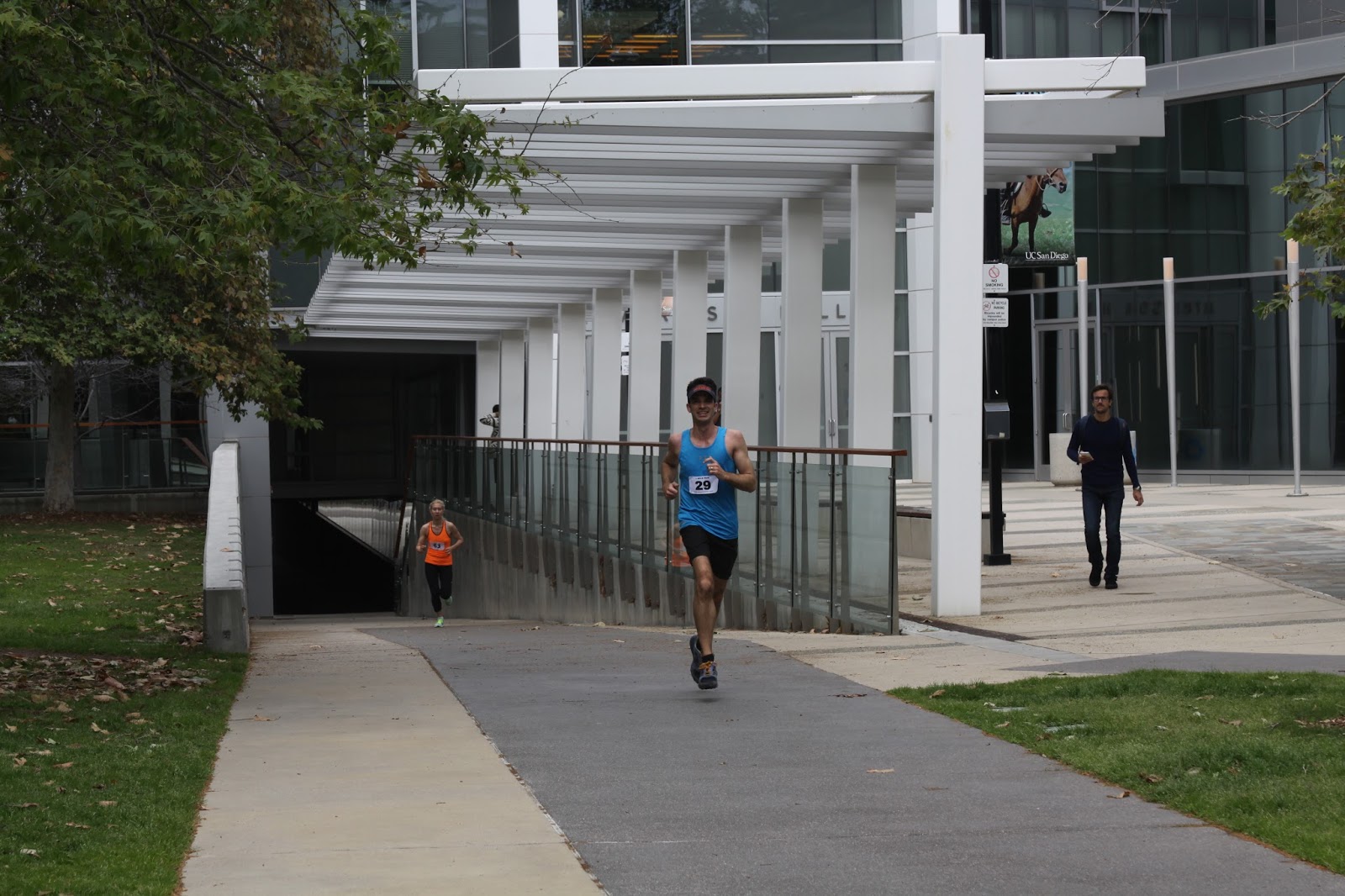
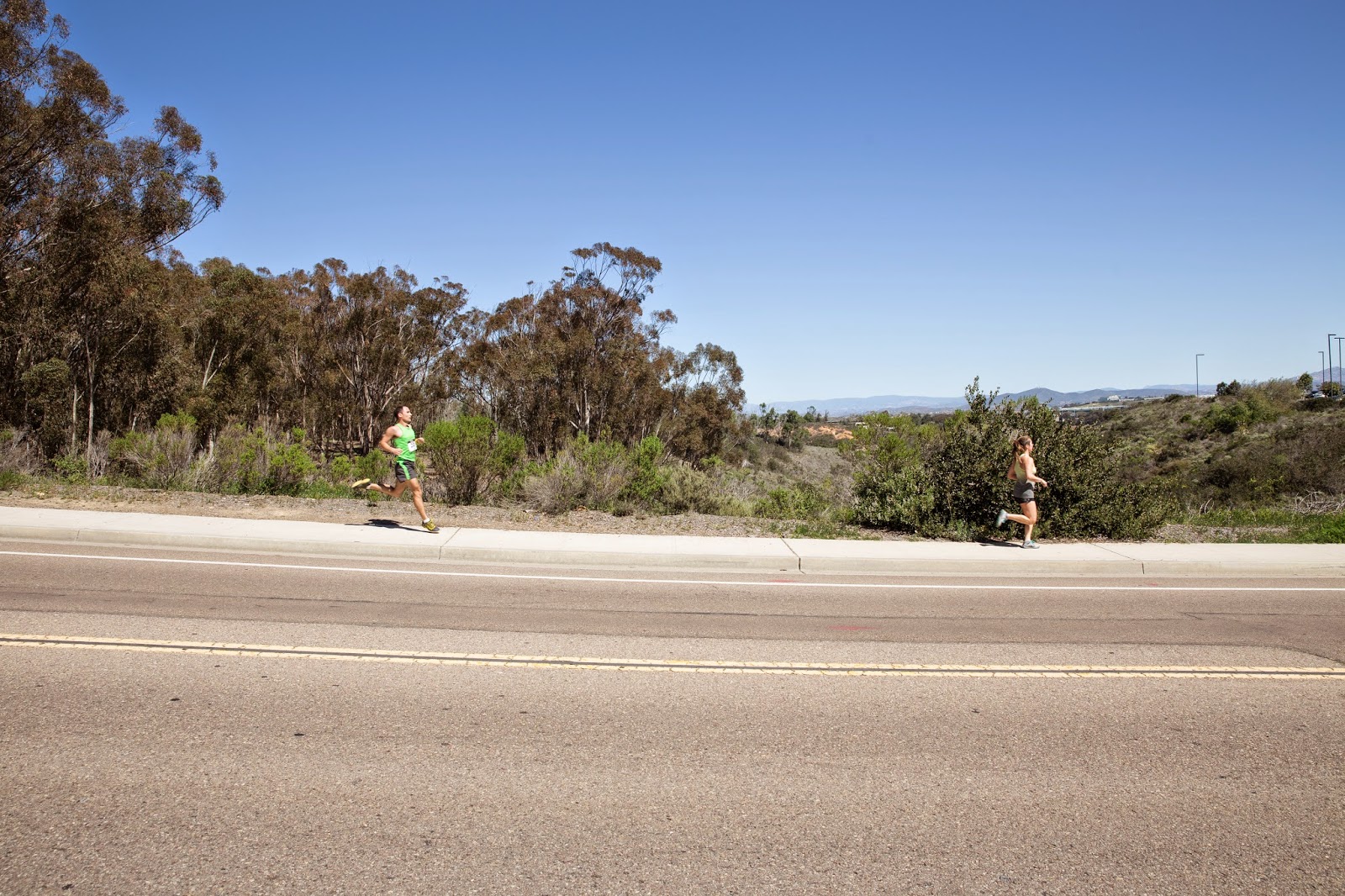
Engineers turn out in force for Triton 5K


Jacobs School of Engineering students, alumni, faculty and staff achieved an elusive trifecta at this year's Triton 5K race.  The Department of Computer Science and Engineering fielded the largest overall team--226 strong. The team also raised the most funds: $6,334. It's named Race Condition--a play on words on a computer science term that means a behavior that happens when a device or system tries to perform two or more operations at the same time, but can't because of its very nature. Some members of the team flew from as far as New York. Meanwhile, the Department of Electrical and Computer Engineering fielded the largest campus team-- 82 strong.

The Triton 5K raises funds for scholarships for UC San Diego students. This year, in addition to the race run on campus, teams also ran in China, Taiwan and the United Kingdom. The event is sponsored by a number of organizations and alumni.

It wasn't just departments that turned out. Global TIES fielded an all-female team. Photo above: from left: Jamie Bradley Steck, alumnus of Global TIES and computer science (master's), now a lecturer for Global TIES; Global TIES Program Director Mandy Bratton; Chonlada "Pam" Woointranon a senior majoring in management science and computer science; Regina Caluya, a chemical engineering senior; Christina Aguila, chemical engineering senior and Brooke Ryan, a computer science junior. The latter four are undergraduate project advisors for Global TIES.

Here is a snapshot of some members of Race Condition:


And some snapshots from the Department of Electrical and Computer Engineering, including Chancellor Pradeep K. Khosla:


Monday, April 11, 2016

Shaking and surfing at Triton Day


UC San Diego is home to the world's largest outdoor shake table (or earthquake simulator) and to some serious surfing--including one of the nation's top college surfing teams and to a team that makes surfboards out of algae.

So this year, students admitted to UC San Diego got a chance to surf during a simulated earthquake, all while wearing an Occulus Rift virtual reality headset. Students heard a warning that a 9.9 earthquake has taken place and a giant tsunami is nearing the shore.

The experience was very popular. According to the San Diego Union-Tribune:

“I thought I was going to fly off of it,” 17-year-old Jasmine Hassan said afterward. “I’ve never experienced virtual reality in that kind of immersive environment. I just think it shows how cutting-edge UCSD is, and you can see the way they apply the research that they do, it’s applicable to everything people are doing in modern-day life.”
Near the shakeboarding experience, students from the UCSD Seismic Outreach Program allowed campus visitors to "make their own earthquakes" by jumping on a mat equipped with an accelerometer, connected to a computer that made a building made of K'Nex shake on a small shake table.

“It’s definitely not your traditional info booth,” said Armen Azizian, a structural engineering graduate student told This Week @ UC San Diego. Azizian said he enjoyed sharing the technology with admitted students one-on-one, including those who aren’t necessarily going to be engineering majors.

UC San Diego Seismic Outreach teaches about seismic safety at Triton Day.

On Library Walk, many of the school's student organizations had come out to get prospective students excited about everything the campus has to offer.

SWE at Triton Day


The Triton Rocket Club showcased their robot.
AIChE, the chemical engineering student organization had a bean bag toss game.
SEDS at UC San Diego talked about 3D printing a rocket engine, a unique feat.

The Tau Beta Pi engineering honors society was out in force.
Engineers Withouth Borders at UC San Diego talked about their projects.


Monday, March 14, 2016

Celebrating Pi Day


March 14th was Pi Day! Students from the UC San Diego chapter of Tau Beta Pi, a national engineering honors society, celebrate Pi Day every year by dropping pie from EBUII.


This year, the pie was made of mayonnaise and fell apart in mid-air!
Everyone got free pizza and pie - IF they could answer an engineering question. Many of the questions involved converting radians to pi.


Undergraduate Daniel Gonzalez came in first in this year's Pi Mile Run
Engineering students also braved finals week and a light drizzle to celebrate Pi Day by running 3.14 miles and enjoying a well-deserved slice of apple pie after.

This year, the Department of NanoEngineering captured the first three places. Daniel Gonzalez, a senior, completed the race course in just 18'36". A triathlete, he showed up for the March 14 race to have fun, he said. Darren Lipomi, an assistant professor and half-marathon runner, came in third.
Meanwhile, Iana Volvach, a Ph.D. student in the research group of ECE Professor Vitali Lomakin, was the first woman to cross the finish line.

In all, more than 60 registered for the run and helped raised about $700 for the San Diego Science Alliance.

Darren Lipomi, faculty member from the Department of NanoEngineering, is close to crossing the finish line.


Wednesday, April 29, 2015

Teams on fast track to success at GrandPrIEEE competition

Twenty one teams from around California vied for first place in the GrandPrIEEE competition organized by the UC San Diego branch of IEEE Sunday April 19. In the end, two teams from Cal State Fullerton took first and second place and a team from UCLA took third place. The first UC San Diego team placed 10th.
The challenge was to design, test and build an autonomous vehicle that could navigate around a track in the shortest amount of time possible. The track was marked on a dark colored carpet with white tape, which in turn covered a wire delivering a 75 kHz sinusoidal signal. The winning team made its way around the track in 16.70 seconds. By comparison, the last team took 55.21 seconds. 
You can watch two videos from the competition below:


Friday, March 13, 2015

Celebrating Pi Day of the century--a daily early


More than 240 people turned out on (the potentially scary) Friday, March 13 to celebrate Pi Day one day early. They helped raise about $1200 for the San Diego Science Alliance by taking part in the annual Pi-Mile Walk and Run. This year, in addition to the slice of pie and T-shirt they earned through their registration, they could also enjoy free pizza, courtesy of The Tau Beta Pi engineering honor society.

The organization also held its second annual pie drop from the top of EBU II. This year's pie was home made, filled with red fruits, including strawberries and cherries, and made a impressive splatter once it hit the ground.

The actual Pi Day will be extra-special this year: at precisely 9:26:53 the date (if written 3/14/15) will match the number Pi to the 10th digit. 

Video of the fun above. All pictures from the event here: http://on.fb.me/1xsNEyV


Thursday, June 19, 2014

Q&A with UC San Diego outstanding senior award winner and bioengineering major Damini Tandon

 Damini Tandon, a bioengineering major, who plans to attend medical school, won this year's outstanding senior award at the UC San Diego All Campus Graduation Celebration. In this Q&A, she talks about the research she conducted, the professors who mentored her and some of her favorite classes here at the Jacobs School of Engineering.
- What made you decide to attend UC San Diego and major in bioengineering?
1a. Upon being accepted to UC San Diego, I was offered the Jacobs Scholarship, a full-ride scholarship for selected engineering school admits. That was a big factor in my decision because the scholarship would (and did) allow me to devote my time to my academics and extracurriculars. This scholarship would (and did) give me the freedom to explore my interests and develop new passions without worrying about how I would pay for my education.
1b. Another reason that I chose UC San Diego was because I was intent on studying bioengineering, and UC San Diego has faculty that are pioneers in the field, has a well rounded curriculum, and is the center of some of the most groundbreaking bioengineering research in the nation. 
2. My decision to major in bioengineering was the natural choice given that I had interest in biology/medicine and a strong aptitude in mathematics, biology, physics and chemistry. Also, I realized that a) bioengineers learn how to think critically and become excellent problem solvers and b) are working on the cutting edge therapies and devices that expand the potential of medicine. This sealed the deal.

- How do you feel the Jacobs School has helped you be prepared for medical school and becoming a surgeon?

As I mentioned above, bioengineering has really helped me to become an excellent problem solver. My learning theory was always to master basic concepts and apply them to problems, and the curriculum at UC San Diego was very much in line with that--this meant that I was able to get ample practice and that too with extremely interesting bioengineering problems. The ability to problem solve and think critically is crucial in the field of medicine and surgery, so the development of this skill has surely helped me to prepare for my future career.
As a bioengineer, I also have a unique perspective because of the nature of the problems we solve. In one class, 186A Introduction to Biomaterials, we learned about different biomaterials, the types of responses they elicit when contacting the body, and how they can be applied to solve different bioengineering problems. At the end of this course, we were asked to design a biomaterial application and that task really helped me to apply what I had learned in the class to help address a need that we found emergent/interesting. My group worked to develop a nanoparticle treatment of glioblastoma multiforme (GBM), in which we used supraparamagnetic iron nano particles encapsulating a chemotherapy drug, functionalized with GBM targeting ligands, and encapsulated in a degrading injectable gel to treat the malignant brain cancer. The experience of understanding the disease in that depth and developing a therapy for it has given me a new look into medicine-when I practice medicine, I will be primed to look for and address needs with creative solutions. This means that in the position of physician, I can work to collaborate with bioengineering to more effectively bring in new therapies to the bedside/operating room.
I feel that the environment of the Jacobs School is one of collaboration and not competition and I think that has primed me to succeed in a career in medicine (and my peers to succeed in their field of choice). The key to success is surrounding yourself with individuals who are motivated and brilliant and working with them to learn from what they do better (improve yourself) and teach them what you do better (help them improve). In medical school, that will mean working with other intelligent students to develop as much understanding of the body (healthy and diseased). In residency, that will mean working with other physicians to improve both their and your own practice. When you are working toward the common goal of improving patient health, the point is not to compete to see who does it better but instead to collaborate and help achieve a combined greater good.

- What were your favorite classes here at UC San Diego?

My favorite classes were surely the ones that required us to apply our knowledge of concepts and facts to real-world problems, because these brought an additional excitement to the assigned tasks--these projects very well mimicked what we could go on to do in industry and showed that we as students had the ability to contribute and actually solve complex, real problems. Here are a few:
BENG 187 Design Series: We designed a device to prevent entrance of environmental toxins into the lactiferous ducts. 
BENG 125 Computational Bioengineering: We created a simplified system of equations to model the transmission of HIV/ADIS in a population (based on tweaking/simplifying existing models) and applied our qualitative understanding of differential equations to analyze and understand the behavior of the unique system.
BENG 186A Introduction to Biomaterials: As described above, we developed a targeted nanoparticle therapy of glioblastoma multiform by functionalizing the drug containing nanoparticles with GBM specific ligands and encapsulating the particles in an injectable, biodegradable gel.

- Are there any faculty members/staff members that you consider your mentors, and if yes, whom?

All bioengineering professors that I have interacted with have made themselves available for questions and to clear any doubts about the taught material. All of the professors that I have conducted research with have made sure to connect with me regularly and offer my advice/pointers/direction. 
A few: 
Professor Cabrales was the professor for the design sequence. He met with my team regularly to check in on our project progress (a few times per quarters) and made an effort to help us resolve any issues and helped to direct us to resources.
Professor Schmid-Schonbein cotaught the Mass Transfer class for bioengineers (BENG 103B) and served as advisor for my design project. He met with us weekly and helped my team to understand the need we were addressing, develop a background knowledge in the field, develop and evaluate our designs, and take the project to the next level as entrepreneurs. He advised us at every step and always made himself available for questions.
Dr. Sonia Ramamoorthy is my research mentor at Moores Cancer center. She has allowed me to shadow her in clinic and the OR to help develop a background understanding of colorectal cancer and its treatment. She then fostered my interest in clinical research by helping me to develop various projects, understand and master the IRB process, and work on data analysis. 
Dr. Adam Engler was my research mentor in my bioengineering lab research. When I was a freshman, Dr. Engler gave me the opportunity to volunteer in his lab and develop mastery of basic lab techniques. He then helped me to develop an independent project, which I was able to pursue with financial support from the CALIT2 program scholarship. He helped to to troubleshoot throughout the process (as did the graduate student who I worked with, Andrew Holle!). 

- Any engineering student organizations that you feel helped you stay connected to the campus?

The Jacobs Scholars Society is the engineering organization that I am a part of, that helps me stay connected to the campus. I, and a few other Jacobs Scholars, helped to conceive the society as a way to provide an organized way for scholars to plan social events that promote the JSS community, professional development events to help prepare the scholars, and service opportunities to allow the fortunate scholars to give back to the community. I served as VP Internal of the organization.

- Feel free to add any other thoughts about your engineering experience here at UC San Diego.

Overall, I have only good things to say about my time at UCSD and within the Jacobs School. I strongly believe that coming here is the best choice I made! I have been surrounded by motivated, intelligent individuals, eager to help brilliant advisors, and have gotten to experience a thorough curriculum focused on development of essential problem solving skills--this has helped to sculpt me into the person I am and I am sure that all that I have learned will help me in the future.

Monday, May 12, 2014

These amazing derby cars raced on campus May 9


An amazing 42 teams signed up to be part of this year's 11th annual Junkyard Derby on Peterson Hill here at UC San Diego on May 9. This year, team LOCO-MOTION came out on top. Congrats Brian Liss, Nate Liu, Evan Ackema, Kyle Candee, Ian White and Cherng Chu!

Every year, teams scour for junk that they can use to build their box car. They have two build days before the race. Finally, the boxcars race down Peterson Hill either round-robin style or in heats until only the fastest (and sturdiest) car is left standing.

The event, organized by the Triton Engineering Student Council, receives the support of the UC San Diego's facilities team and of the Associated Students. This year, Sprinkles provided free cupcakes at the event. If you missed the derby, you can still see the winning car on display in the science and engineering section of Geisel Library.

Pictures of the event courtesy of Tony Wong and Sam Sun.