Showing posts with label education. Show all posts

Friday, June 3, 2016

Ph.D. alum helps make robotics and programming accessible


As a Ph.D. student at the Jacobs School of Engineering, Nick Morozovsky built many robots, including SkySweeper, a power line inspector, and Switchblade, a roving and balancing robot. And he worked on bringing robotics to everyone, especially young students.

Morozovsky worked with Solana Beach-based Rokenbok Education on a robotics kit that teaches children as young as 8 how to program Arduino microcontrollers. The ROKbuino Programmable Robotics Set is now available on Kickstarter for $99 off its retail pricing. Morozovsky designed the original prototypes on a low-cost 3D printer. Rokenbok is now seeking funding to mass-produce the kits by using injection molding, which is much faster but requires a significant upfront capital investment. The company hopes to bring the sets to homes across the country as well as under-served schools where children have limited access to STEM opportunities.

The kit allows students to connect motors and a variety of sensors to build and program a beetle bot, a scorpion hunter and a Ferris Wheel. It includes more than 400 building components. The Kickstarter campaign runs until June 30.

After earning his Ph.D. in 2014, Morozovsky co-founded start up Accel Robotics with fellow Jacobs School alum Marius Buibas. 
Morozovsky with SkySweeper, a robot designed to inspect power lines.

Thursday, March 24, 2016

Memorandum of Understanding with Korea Advanced Institute of Science and Technology

Jacobs School of Engineering Dean Albert P. Pisano shakes hands with Young-Ho Cho, of the Korea Advanced Institute of Science and Technology (KAIST) after signing a Memorandum of Understanding
The University of California, San Diego Jacobs School of Engineering will take part in an international collaboration with the Korea Advanced Institute of Science and Technology (KAIST) on precision medicine based on new technology.

The Memorandum of Understanding was signed on March 14 at the U.S.A-Korea Joint Symposium on N/MEMS and Bioengineering.

Jacobs School of Engineering Dean Albert P. Pisano gave the welcome at the event, which included presentations by Gordon Hoople, a PhD candidate in Pisano’s lab, and Kun Zhang, a professor in the Department of Bioengineering.


The objective of the collaboration is to establish a long-term fruitful platform for bilateral cooperation by means of joint research and education programs, technical information and research exchange programs between two parties.

Friday, February 19, 2016

#ILookLikeAnEngineer: Alex Buitimea

As president of UCSD's Society of Hispanic Professional Engineers (SHPE), Alex wants to empower the Hispanic community. He loves soccer and problem-solving, and he also cares deeply for underrepresented regions and hopes to develop technology for education.

Name: Alex Buitimea
Major: Computer Engineering
Estimated graduation date: June 2016


Why did you choose engineering at UC San Diego?
I think primarily in the area I grew up, there’s not many engineers. Not many talked about engineering. I myself didn’t know what engineering was until the last year when I was choosing my major. I knew I was good at math and I knew I liked solving problems, but I didn’t know that what the the meaning of engineering was— solving problems. Obviously, not knowing what path I was going to take but knowing I wanted to something like that, that’s why I ended up choosing it.


I’m very fond of technology, I’m very fond of computers. I was really good at it, I believe, because I was always on my laptop. So pairing the two, I chose computer engineering. I knew this was a good engineering school.


What do you see yourself doing in the future, goals after school?
Many people have been asking me this, especially recruiters. I always tell the same thing: I don’t know. I learn by experience. You know, trying out different things, you get to learn what you’re actually passionate about. I always tell all our members in SHPE, it’s okay not to have a passion, it’s okay if you don’t know your goal, but just by letting yourself try different things, you’re going to find what you’re passionate about and what you think you’re good at and what you should actually keep doing. So I know I want to go into industry because I really like the atmosphere of working with other people, especially where you get to solve problems that are actually going to go into the world and out there, into things people are actually going to purchase. I think I want to go into industry for that same reason. I can start working and teams and put stuff out there.


Do you see yourself with a specific company? Or do you have a dream job, beyond practicality?
It always brings me back to where I grew up. In the San Fernando Valley, there’s not many opportunities. You rarely hear about engineering. Schools are not that great. But one thing that technology does for them is it provides them new opportunities to teach in different ways. It also encourages students to pursue STEM, so I knew my freshman year, I wanted to pursue computer engineering more on the side of building technology for education, such as building smart boards, things like that. Building devices that actually help students learn better, so I think I want to follow that path. I know Microsoft and Google are doing big things along that path. If I can be involved with a company that has that kind of sector or project for education, I think I’ll follow that.


If you weren’t in engineering, what do you think you’d be doing?
I honestly don’t know what I’d be doing other than engineering. I really like solving problems, and that’s exactly what engineering is. If I were to do something else, I’d probably be a contractor. Throughout high school, I worked with my dad in demolition, so I would work at job sites, demolishing houses and bringing metals apart. His dream has always been to have his own company, and he’s been doing this for the past four years. I’ve been helping him. In the situation he’s in right now, he can’t be the owner or manager so he’s always asking me if I’d be willing to do it. After all these years helping, I think I would do that, being a contractor.


What are three interesting facts about you?
1) My passion for turning technology to education. I respect working with other people on teams, and I respect their ideas and strengths as well. That’s one of the reasons I chose to be the president of our [SHPE] chapter. I was going to be working with eleven other students to move that chapter forward.
2) Respecting people and working on teams.
3) Definitely stamina. I played soccer in high school and now on an intramural team. It’s definitely stamina to move forward. Even if you’re discouraged with not getting a certain internship or a certain research position or doing well in class, if you just get up and keep on trying, at the end of the day, you’re going to end up on the other side. That’s something that I’m very fortunate to see in myself, that I have that stamina to keep going.


Would you say you have a favorite quote along those lines? Or something you live by?
I always like to work with teams. One thing I always stay is “If you could do something in under two minutes, just do it now.” At one of my internships, one of my co-workers would always lived by that. It just clicked with me. Why wait? Keep moving forward.


Also, if you could say you can do things differently and say that you’re working hard...Working hard is not enough. It’s working smart, making sure that the amount of time you’re putting in is smart. Make the right decision about how you’re spending time.


Hobbies?
I like spending time with my friends and I play soccer on the weekends. I’ve been playing soccer for twelve years, the first seven years I played defense and the past five years I’ve played right midfielder. I also play video games, and that’s weird because I played no video games until my third year of college. I have an xbox, but I also play League of Legends.


What does this campaign mean to you? Any specific opinions?
Primarily, the campaign also falls under our [SHPE’s] objective, which is to empower the Hispanic community to realize its fullest potential. All STEM majors. Everything is possible just by putting your mind to it and making sure that you don’t tell yourself that you can’t do something if you’re very passionate. Just because you don’t have the same opportunities as everyone else, it doesn’t mean that you can’t be successful. We make sure that people don’t think that way. There are people in your community that will help you be successful. I think that also falls under the campaign. No matter what people think or what you think of yourself or what you can’t do, other people may see it differently and believe in you. Know that you can be an engineer, that you can be successful.


I grew up in a social justice community. It was good and bad. I grew up with my principal as also my life mentor. He was very passionate about how anything is possible. I put my own spin to it, by empowering the community with STEM. Making sure that we go into STEM fields, that we go in and explore and solve problems. I’m actually taking a course in ethnics and work. You’d be surprised how much diversity helps with solving problems and how having a diverse team— not necessarily just a matter of being Hispanic or black. Having people who think differently will actually help you solve a problem much better than having people who all think the same.

Thursday, February 4, 2016

Still connected after all these years

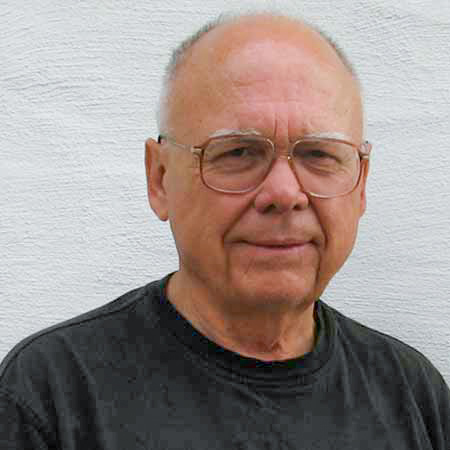
When he doesn't bodysurf, S. Gill Williamson focuses on providing free educational materials for CSE 20 and CSE 21. The former chair of the Department of Computer Science and Engineering, now in his 70s and an emeritus, was profiled in This Week @ UC San Diego as part of a feature about faculty members who have been connected to the campus for 50 years or more.

Williamson joined UC San Diego as a professor of mathematics in 1965 and then became the chair of the computer science department in 1991.  He retired in 2004.

Here are some of the things he had to say:

On why he decided to provide free educational materials:

 “From 1965 to 1991, I was a mathematics professor. I taught many calculus classes large and small during this period. In 1991, I transferred to Computer Science and Engineering—so my calculus teaching days were over. But in cleaning out files I came across handouts that I used to give to students who wanted to tutor for my integral calculus classes. I had fun rereading this ‘tutors’ guide,’ so I decided to bring it up to date with respect to online resources now regularly used by students.”

On why he stayed at UC San Diego for so long:

“The main change in higher education for me,” said Gill Williamson, “was the increasing number of students in my classes and less opportunity to talk with them personally about the subjects I was teaching. A student can ace every exam but, under questioning in person, show little imagination or curiosity. This important type of information about students was missing for me in later years.”
On being chair of the Department of Computer Science and Engineering:

"Although I had had little experience in administrative work, the change worked out well for me. CSE had hired many talented young people who were willing to tell me about their research. I learned a lot from them. Also, CSE had an excellent and talented staff.”

On higher education and research:

“The main change in higher education for me,” said Gill Williamson, “was the increasing number of students in my classes and less opportunity to talk with them personally about the subjects I was teaching. A student can ace every exam but, under questioning in person, show little imagination or curiosity. This important type of information about students was missing for me in later years.”
Read the full story here

Thursday, January 7, 2016

UCSD Robotics and BeagleBone Foundation unveil new board for robotics education at CES


Professor Thomas Bewley (left) at the Texas Instruments booth at CES 2016
The BeagleBoard.org Foundation and the UCSD Coordinated Robotics Lab are rolling out a new board for embedded robotics applications at the Consumer Electronics Show in Las Vegas this week.
The Beagle Board Blue is a new, low-cost, credit-card-sized Linux computer integrated with wireless communication, sensors for situational awareness, power electronics for battery management and motor control and breakouts for Pulse Width Modulation and bus communication for a host of industry-standard sensors and actuators.
The Blue will be featured in hardware kits for upcoming MOOCs about embedded control and robotics currently being developed by the UCSD Coordinated Robotics Lab, led by Professor Thomas Bewley.
The Blue and Bewley, as well as representatives from the BeagleBoard.org Foundation will be at the Texas Instruments booth at CES all week.

Friday, April 12, 2013

CodeSpells Creator Sarah Esper is Presenting at Research Expo on April 18


Computer Science PhD student Sarah Esper is one of the creators of CodeSpells, a videogame that teaches kids Java. CodeSpells has gotten a lot of attention recently (press release, CodeSpells blog) . Here's a sample of some of the media coverage it's received so far:

Wired: Experimental Videogame Teaches Kids How to Program in Java

Gizmag: Video game teaches Java programming language to players

Examiner.com: A new game lets you save the world and learn Java at the same time

Esper is one of the 200+ grad students presenting their research projects at Research Expo on April 18, here at the UC San Diego Jacobs School of Engineering.

Register for Research Expo here.
UC San Diego alumni receive half-price admission.
Employees of CAP member companies receive 2-for-1 admission.

The poster title and abstract are below:


31. CODESPELLS: LEARNING TO PROGRAM THROUGH IMMERSIVE GAMEPLAY

Primary Student
Name: Sarah Esper
Student CollaboratorsStephen Foster
Abstract
CodeSpells is a 3D immersive video game designed to teach CS1 level programming concepts to novice students. It is meant to be a stand alone system that guides students through CS1 concepts in a explorative way, encouraging students to engage in pre-defined ?quests? that address particular concepts, but also informally through exploring the 3D world. There have been results to indicate that CodeSpells is a system that is engaging for students ages 9-24 who are complete novice programmers, interested in programming. Early results indicate that little external help is necessary for the students to complete the pre-defined challenges. This study aims to determine what kind of help is necessary as well as how much learning occurs in normal game play.
Related Links:
  1. http://www.jacobsschool.ucsd.edu/news/news_releases/release.sfe?id=1347
  2. http://www.youtube.com/watch?v=TslR9CG6yKI

Monday, October 15, 2012

IEEE Spark


I stumbled on IEEE Spark this morning, which was linked from Nano.gov (the URL for the National Nanotechnology Inititative)

IEEE Spark is an online publication intended to inspire students ages 14-18 to learn more about engineering, technology, and computing, and raise excitement about careers in these disciplines. IEEE Spark features articles on technological innovation, university preparation tips, professional career profiles, at-home activities, comics, and more! IEEE Spark is brought to you by IEEE with generous funding from the IEEE New Initiatives Committee.